by Francesca Doria (British Columbia)
In spite of all our New Year’s wishes, 2008 hadn’t begun well for my sister and I. Our Mum was bone-marrow transplanted and had been through a hard time, and our cat Émile, that had shared half of our lives with his endless care and reassuring love, was about to die of kidney failure. He had held out to help our mother and the two of us, but now he was wearing out, silently fading away. At the time our mother’s house had been restored, my sister and I had lived in until the inner works had started, so we had to move to our own flat where our mum already dwelt.
While I was staying with our mother and Émile, my sister Paola got back to the big house to tidy up and put in order everything. She immediately called me, informing that there was a jay she was feeding every day on my window sill and a pair of magpies building their nest on the top of our secular magnolia tree.
At first I was thrilled: I had always loved those elegant, intelligent, funny and noisy birds, and that news had surpassed my wish. But being in anxious state of mind, I nearly forgot both magpies and the friendly jay, until I came back home along with our mum, Émile and our other four cats.
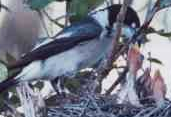
The magpies were still at work: the male brought branches and other items, the female observed/examined them carefully, tried them out, sometimes discharged them, and he flew back and forth trying to find the best things to fit.
The jay was still coming, curiously watching the new incomers. There also was a couple of large hooded crows, that were the undisputed owners of that territory, from a bird’s point of view.
We came back home on 4th March 2008: Émile made a huge effort to visit once again all the rooms of the house; although many things had changed dramatically (my sister’s room had a different entrance, one of the bathrooms had been rebuilt and much more) he recognized his house, blessed it and stood with us quietly and warmly as he had always done.
On 16th March he was put to sleep: until that day the sky had been beautifully crystalline and blue, the sun had shone bright, the moon at night was big and white in a starry sky, the sea was stunningly navy blue and glittering with sun sparkling, there were breathtaking sunsets. But that day the sky grew dark, and heavy drops of rain began to fall. They got heavier and heavier, like a machine gun; although I was dazed with grief, I couldn’t help thinking of the poor birds outside, especially the pair of magpies, whose nest was under that torrential rain. The female sat on her eggs and never moved; the male brought her food.
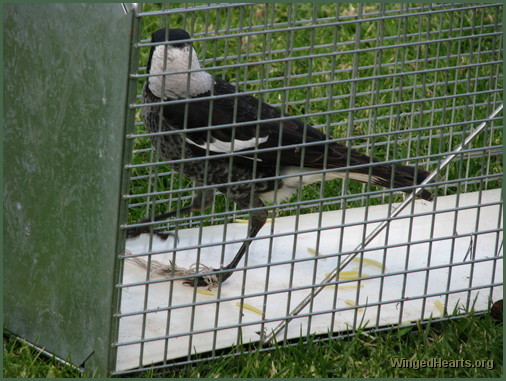



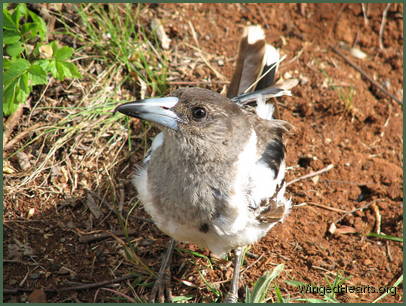
 Pied butcherbirds are prone to conjunctivitis, much more so than their cousins the